

Brick homes, back alleys and tornado sirens
ADT Home Security in St. Louis, MO
Many St. Louis homes are older brick flats and bungalows with a gangway on the side, a basement below and a garage that opens onto the alley. The back of the house needs as much attention as the front door. These homes also face Very High tornado and heat wave risk, basement water during heavy rain and real earthquake exposure from the New Madrid Seismic Zone.
Quick answer
Can I get ADT home security in St. Louis, MO?
Yes. As an independent ADT Authorized Dealer, MFPG Security designs and installs ADT systems for homes throughout the City of St. Louis. Older brick homes here often have an alley side, a gangway and basement doors, and a good plan covers all three. Smoke and carbon monoxide detection and flood and water sensors guard against storm outages and basement backups. ADT provides 24/7 professional monitoring with cellular backup. Call for a free quote based on your address.
Last reviewed:
St. Louis at a glance
| Data point | Value | Source |
|---|---|---|
| Population | 288,512U.S. Census Bureau, ACS 5-year 2024 | |
| Owner-occupied homes | 45.3%U.S. Census Bureau, ACS 5-year 2024 | |
| Single-family detached homes | 43.4%U.S. Census Bureau, ACS 5-year 2024 | |
| Homes in buildings with 10+ units | 21.0%U.S. Census Bureau, ACS 5-year 2024 | |
| Median year homes were built | 1938U.S. Census Bureau, ACS 5-year 2024 | |
| Median home value | $197,500U.S. Census Bureau, ACS 5-year 2024 | |
| Housing vacancy rate | 16.8%U.S. Census Bureau, ACS 5-year 2024 | |
| Overall natural hazard risk (county) | Relatively HighFEMA National Risk Index, City of St. Louis | |
| Highest-rated hazards (county) | Tornado (Very High); Heat wave (Very High); Inland flooding (Relatively High); Earthquake (Relatively High)FEMA National Risk Index, City of St. Louis |
What threatens a St. Louis home
Tornadoes, heat, basement water, earthquakes and break-ins
FEMA's National Risk Index rates the City of St. Louis Relatively High for overall natural hazard risk. The city is independent and not part of St. Louis County, so FEMA scores it as its own county. Two hazards rate Very High: tornadoes and heat waves. Inland flooding and earthquakes both rate Relatively High.
Tornadoes have torn through city neighborhoods more than once, and spring storm nights here often bring sirens, hail and power outages. Heat waves bring humid stretches when an older brick house holds heat well into the night. Flooding in the city is often less about rivers topping levees and more about heavy rain overwhelming old combined sewers. That can push water up through basement drains along the River Des Peres corridor and elsewhere. The New Madrid Seismic Zone gives the region real earthquake exposure, and unreinforced brick walls, chimneys and old gas lines are the weak points.
Property crime is a common worry in many parts of the city. Typical concerns include packages taken from porches and stoops, car break-ins on streets with little off-street parking, and thefts from detached garages along the alleys. The city's housing vacancy rate is 16.8%, so many blocks mix empty buildings with occupied homes. Vacant structures can draw copper and brick theft and trespassing, which makes lighting, cameras and door sensors on neighboring homes more valuable.
- Tornadoes and storms: cellular backup keeps the system talking to ADT monitoring if power or internet goes down, and the ADT+ app sends alerts to your phone while you shelter in the basement.
- Heat waves: a smart thermostat lets you check and adjust indoor temperature remotely, which matters for older relatives and pets at home.
- Basement flooding: flood and water sensors near floor drains, sump pits and water heaters alert you as water starts to rise.
- Earthquakes: monitored smoke and carbon monoxide detection helps catch fire or gas problems if shaking damages old chimneys or lines.
- Break-ins and theft: door and window sensors, motion sensors and glass break sensors cover entry points, while outdoor cameras and an ADT video doorbell watch porches, gangways and alleys.
Housing and neighborhoods
Setting up a system for St. Louis housing
The median St. Louis home was built in 1938. That often means solid red brick, plaster walls, tall double hung windows, a full basement with its own exterior door and a back yard that ends at a shared alley. Single-family detached homes make up 43.4% of housing, so many residents live in two-family flats, four-family buildings, row houses and apartments. Another 21.0% of homes are in buildings with ten or more units, from converted warehouse lofts to high rises.
Only 45.3% of homes are owner-occupied, so many households rent and need equipment that installs cleanly and can move with them. The median home value is $197,500, and many owners are rehabbing older houses. A system should protect that investment during the work as well as after move-in.
Soulard, Benton Park and Lafayette Square
These near south side neighborhoods are full of nineteenth century brick row houses and flats built close to the sidewalk, with rear yards and carriage houses along the alley. Soulard's bars and festivals bring steady foot traffic. Put door sensors on the front, rear and basement doors, add glass break sensors for street level windows, and aim an outdoor camera at the alley and back gate. Historic district standards can limit visible facade changes, so a discreet video doorbell and indoor mounted equipment often work best.
Tower Grove South, Bevo Mill and Dutchtown
South city is known for brick bungalows and two-family flats with side gangways and detached garages. The gangway is a hidden path straight to the back door, so cover it with an outdoor camera and place a motion sensor inside the rear entry. In a two-family flat, each unit can have its own system and keypad. Basement flood sensors are a smart addition, since many of these homes have older floor drains.
Central West End and Downtown lofts
The Central West End has grand older homes on private streets near Forest Park, plus high rise apartments. Downtown and Washington Avenue have converted warehouse lofts. Apartment and loft residents usually focus on the unit door, a video doorbell or indoor camera, and water sensors under sinks and near laundry, since a leak can travel to units below. Owners of larger CWE homes should cover every exterior door, including back stairs and side porches.
St. Louis Hills, The Hill and Southampton
These south and southwest city neighborhoods have well kept brick bungalows and cottages with attached or alley garages, and many longtime owners. Garage door control and a camera covering the driveway or alley help guard against garage break-ins. Smart locks make it easy to let in family, dog walkers or contractors without hiding a key, and smoke and carbon monoxide detection adds protection around older gas furnaces.
Questions about adt home security in st. louis? A specialist can help.
Call 833.842.0818Where to start
A starting ADT setup for a typical St. Louis brick home
This starting point fits a common St. Louis home: a brick bungalow or flat with a front door, a back door off the alley, a basement entrance and a detached garage. Your quote call will adjust it to your floor plan and budget.
- Door sensors on the front, rear and basement doors, because older homes often have three or more ways in at ground level.
- Window sensors or glass break sensors on basement and first floor windows, which sit low and often face a gangway or alley.
- A motion sensor in the main hallway or stairs, so anyone who gets past a door is still detected.
- An ADT video doorbell to watch the porch or stoop for deliveries and visitors.
- An outdoor camera covering the alley, back gate or detached garage, where thefts often happen out of view.
- Smoke and carbon monoxide detection, monitored around the clock, for old furnaces, water heaters and gas lines.
- Flood and water sensors by the floor drain, sump pit and water heater to catch sewer backups early.
- Cellular backup so the system stays connected during storm related power and internet outages.
- Optional additions: smart locks, garage door control and a smart thermostat managed in the ADT+ app.
How it works
Professional installation and ADT 24/7 monitoring in St. Louis
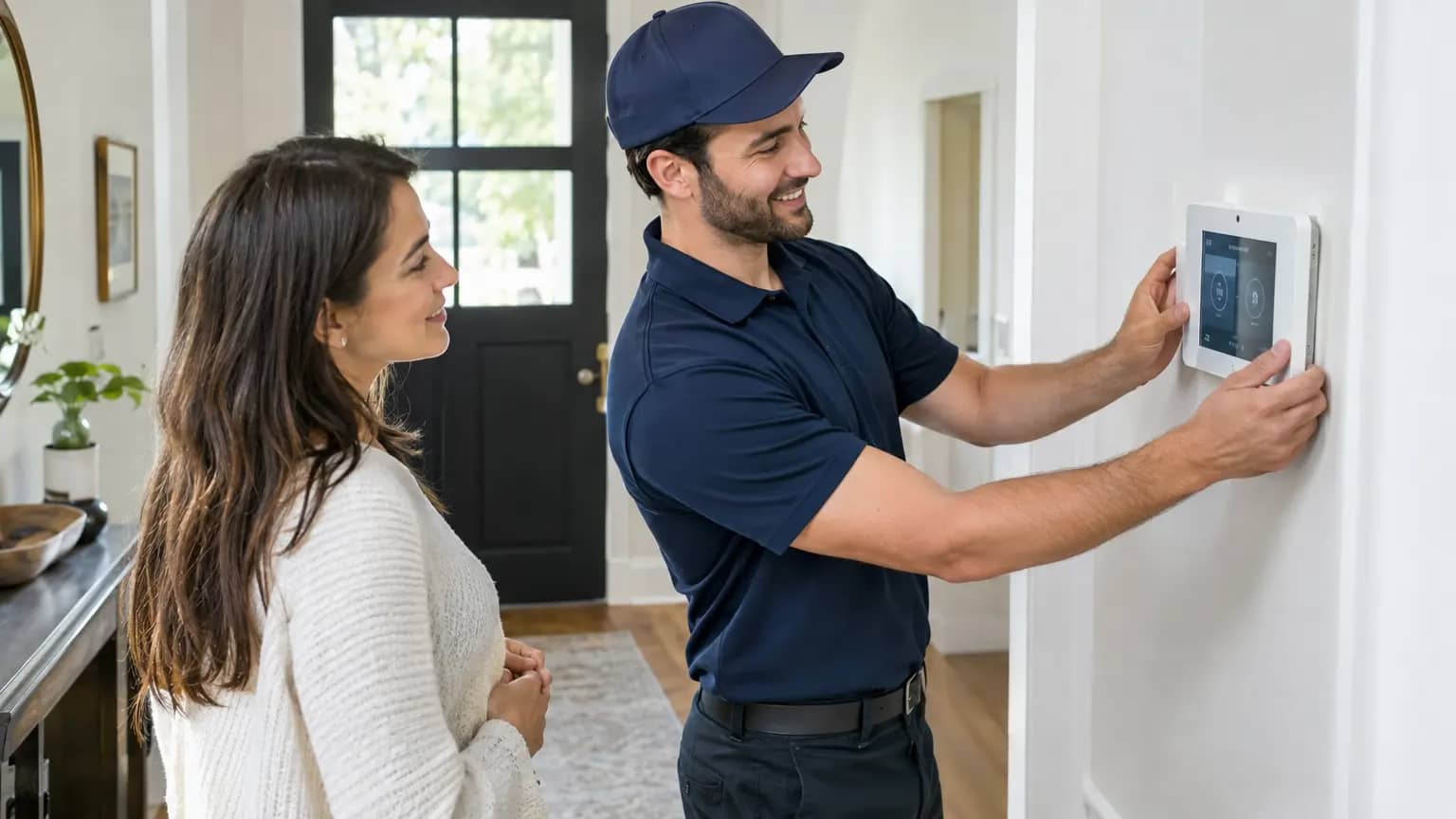
Professional installation matters in old brick homes. Thick masonry walls and plaster over metal lath can weaken wireless signals, and a trained installer knows where to place the panel and sensors so they communicate reliably. The installer also walks the basement, gangway and alley side with you to cover entry points people tend to forget.
ADT takes over the watching once your system goes live. Say a rear door sensor trips in a Dutchtown flat, or a smoke detector sounds in a Soulard row house. An ADT agent reviews the signal, tries to confirm what is going on and reaches the right emergency services under local protocol. Spring storms here can drop power and internet together, and cellular backup gives the panel a second path to ADT. From the ADT+ app you can arm, disarm, view cameras and adjust smart devices from a desk downtown, a seat at Busch Stadium or a weekend at the Lake of the Ozarks.
The City of St. Louis is its own jurisdiction, separate from St. Louis County and the many small municipalities around it. Alarm rules in Clayton or Kirkwood may not match the rules inside city limits. Ask the city whether your address needs alarm registration before monitoring starts, and bring any questions to your quote call.
Questions about adt home security in st. louis? A specialist can help.
Call 833.842.0818Climate protection
Weather-ready sensors for St. Louis summers, storms and winters
St. Louis swings from humid river valley summers to winter freezes, with violent spring storms in between. Smoke and carbon monoxide detection is the foundation, since many homes from the 1938 era and earlier still run older gas furnaces and water heaters in the basement, and some households use space heaters or generators during outages.
Flood and water sensors catch basement backups after downpours overload the old combined sewers, plus leaks from aging pipes. In winter, a smart thermostat lets you check indoor temperature remotely so a vacant flat or a house left during a holiday trip does not get cold enough to freeze pipes. In a summer heat wave, the same thermostat helps you keep an eye on conditions for family members or pets at home.
Talk to an ADT specialist right now.
Questions
ADT Home Security in St. Louis: common questions
I rent in St. Louis. Can I still get an ADT system?
Yes. Fewer than half of city homes are owner-occupied, so renting is common here. Wireless sensors, cameras and a video doorbell can be installed with minimal impact on walls and trim. Check your lease and ask your landlord before mounting anything outside, especially on historic facades. Ask on your call which equipment can move with you later.
What works best for a downtown loft or high rise apartment?
Most loft and apartment residents start with a door sensor on the unit entrance, a motion sensor, an indoor camera and water sensors under sinks and near the washer. If your building allows it, a video doorbell helps with package and visitor alerts. Building management may have rules about drilling or exterior devices, so we plan the install around them. ADT 24/7 professional monitoring works the same in an apartment as in a house.
My house is in a historic district or on a private street. Is that a problem?
Usually not. Neighborhoods like Lafayette Square and Soulard have historic district standards, and private streets in the Central West End often have their own associations. These rules typically focus on visible exterior changes. Most ADT equipment mounts indoors, and cameras and doorbells can be placed discreetly. Check your district or association guidelines before installation, and we can design around any limits during your quote call.
Will my system work during a tornado warning or power outage?
With battery backup and cellular backup, the system can keep communicating with ADT monitoring when storms knock out power or internet. You can get alerts in the ADT+ app while you shelter in the basement. Smoke and carbon monoxide detection stays active, which matters if you run a generator or space heater after a storm. If an alarm comes in, an ADT agent works to confirm it and calls for help under local protocol.
How can a system help while I am away on vacation?
Use the ADT+ app to arm the system on your way out, then check cameras and alerts from wherever you are. A smart lock lets a neighbor or pet sitter in with no hidden key. While the house sits empty, water sensors and a smart thermostat watch for basement flooding, summer heat and winter freezes. This matters on blocks with vacant buildings, where a dark house can attract attention.
I am rehabbing an old house. When should I add security?
Plan it early. Rehab sites in St. Louis can attract theft of tools, copper and appliances, so an early camera and sensor setup can help protect the work in progress. If walls are open, it is a good time to plan panel placement and any wired options. Once you move in, the system can expand with smart locks, a thermostat and more cameras. Call for a quote that fits your project stage.
Does the City of St. Louis require an alarm permit?
Because the city is independent from St. Louis County, its alarm rules are set separately from those in county towns like University City or Webster Groves. A friend's experience in the county may not apply to your city address. Contact the City of St. Louis directly to confirm current requirements before monitoring begins. We do not quote city fees, but we can walk through the general process on your quote call.
What happens to my system if I move within the St. Louis area?
Moving from one city neighborhood to another, or out to St. Louis County, is common. Ask about options for transferring service, since some of your wireless equipment may be able to move with you. Your new home may need different coverage, such as an alley camera or extra basement sensors. Call before your move so we can review your new address and plan the setup.
MFPG Security is an independent ADT Authorized Dealer. ADT, ADT+ and related marks are trademarks of ADT LLC. Equipment, features and offers vary by package and location; call for details. Page reviewed October 15, 2026.
ADT services for homes in St. Louis
- Home securityHome SecurityBuild an ADT home security system from door, window, motion and glass break sensors plus a touchscreen panel, installed and monitored 24/7. Call 833.842.0818.
- Security camerasSecurity CamerasAdd ADT security cameras to see your home from your phone, get alerts for people and vehicles, and pair video with 24/7 ADT monitoring. Call 833.842.0818.
- Smart homeSmart HomeADT smart home devices put locks, lights, thermostat, garage door and plugs in one app, alongside your 24/7 monitored alarm. Call 833.842.0818.
- Professional monitoringMonitoringADT 24/7 professional monitoring watches your alarm day and night and contacts you or emergency services when a sensor triggers. Call MFPG at 833.842.0818.
- Life safetyLife SafetyADT life safety detectors cover smoke, fire, carbon monoxide and water leaks, with 24/7 ADT monitoring. Installed by MFPG in Monroe, LA. Call 833.842.0818.
- Professional installationInstallationMFPG Security technicians install your ADT system, test every device and show you how to use it. ADT monitors it 24/7. Call 833.842.0818 to schedule.
- Current offerDealsSee the current MFPG Security ADT deals: free security equipment ($850 value) with a $99 installation charge and 24/7 monitoring. Call 833.842.0818 for details.